
DATA
Housing starts, six-month trend
244,149
units, SAAR trend
- Geography
- Canada
- Period
- August 2026
CMHC six-month moving average of the seasonally adjusted annual rate of total housing starts.
Country dossier
A high-price housing market with an official estimate of how much more construction would be required to restore affordability.
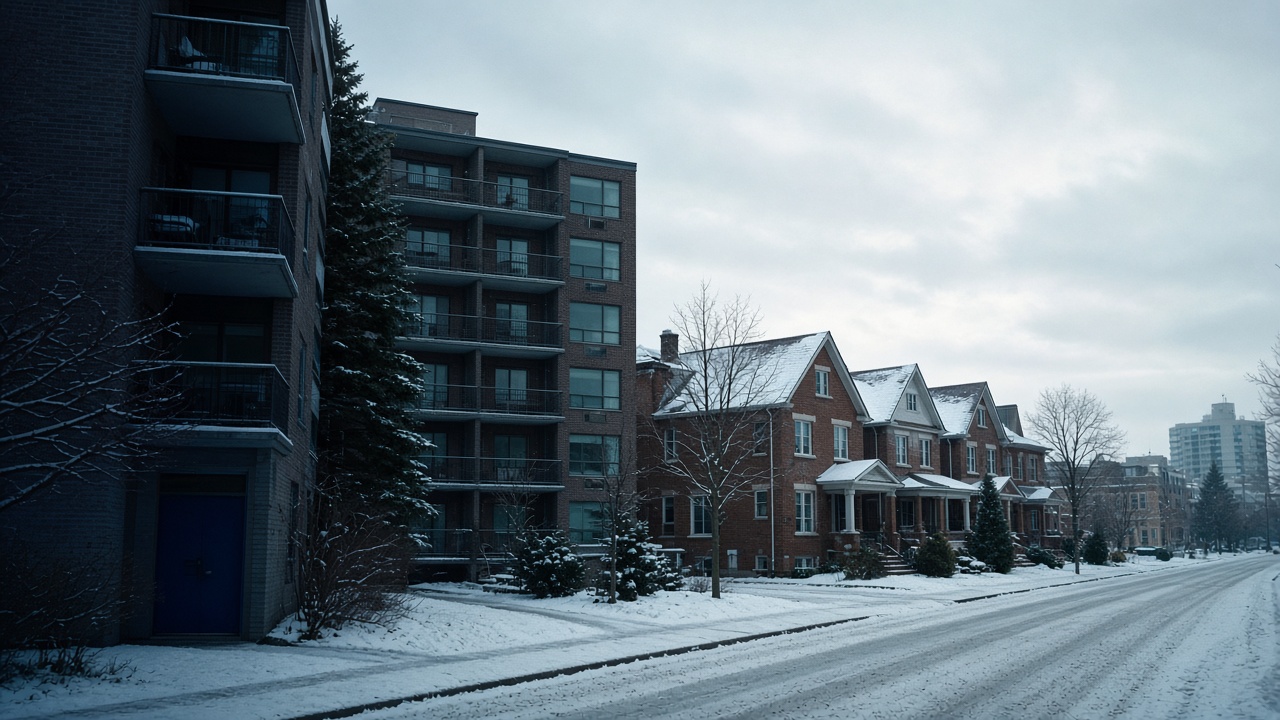
Canada publishes some of the clearest official estimates of a housing supply gap. CMHC's 2026 work argues that annual starts would need to reach 417,000 to 469,000 homes to restore pre-pandemic affordability by 2036, while current construction is slowing. OECD price-to-income data place Canada among the most stretched high-income markets.
Housing starts, six-month trend
244,149
units, SAAR trend
CMHC six-month moving average of the seasonally adjusted annual rate of total housing starts.
Annual starts needed to restore pre-pandemic affordability by 2036
417,000–469,000
homes per year
CMHC modeled range. The width reflects different assumptions about how strongly households respond to lower prices.
CMHC reported a 244,149-unit six-month trend in housing starts in August 2026, with year-to-date starts down 4% in larger centres. Completions and units under construction remain historically elevated in some markets, but the agency warns that ownership-oriented construction is weakening even as rental supply has expanded.
Federal, provincial, and municipal tools all matter in Canada: immigration and household formation, development charges, zoning, and CMHC finance. Policy discussion here stays attached to official estimates.
This heading is part of the standing country/city template. Content is added when a sourced statistic or analysis exists for Canada. Until then the section remains a labeled slot rather than a fabricated narrative.
This heading is part of the standing country/city template. Content is added when a sourced statistic or analysis exists for Canada. Until then the section remains a labeled slot rather than a fabricated narrative.
This heading is part of the standing country/city template. Content is added when a sourced statistic or analysis exists for Canada. Until then the section remains a labeled slot rather than a fabricated narrative.
This heading is part of the standing country/city template. Content is added when a sourced statistic or analysis exists for Canada. Until then the section remains a labeled slot rather than a fabricated narrative.
This heading is part of the standing country/city template. Content is added when a sourced statistic or analysis exists for Canada. Until then the section remains a labeled slot rather than a fabricated narrative.
This heading is part of the standing country/city template. Content is added when a sourced statistic or analysis exists for Canada. Until then the section remains a labeled slot rather than a fabricated narrative.
Source: Canada Mortgage and Housing Corporation · 16 September 2026
Source: Canada Mortgage and Housing Corporation · 27 July 2026
Source: Canada Mortgage and Housing Corporation · 15 January 2026
No. CMHC's 417,000–469,000 range is an estimate of the annual construction pace needed through 2036 to restore pre-pandemic affordability, given its model. The associated annual supply gap versus business-as-usual is smaller. Read the range as a trajectory, not a one-year deficit.
[1] Tier 1 — Primary
Canada Mortgage and Housing Corporation. Housing starts and construction data for August 2026.
CMHC six-month trend in housing starts of 244,149 units in August 2026, down 1.3% from July. Year-to-date starts in centres of 10,000+ were 149,542, down 4% from 2025.
Open original source[2] Tier 1 — Primary
Canada Mortgage and Housing Corporation. Slowing home construction threatens recent affordability gains.
CMHC estimates Canada needs 417,000 to 469,000 housing starts a year to restore affordability to pre-pandemic levels by 2036.
Open original source