
Scenario
Continued affordability decline
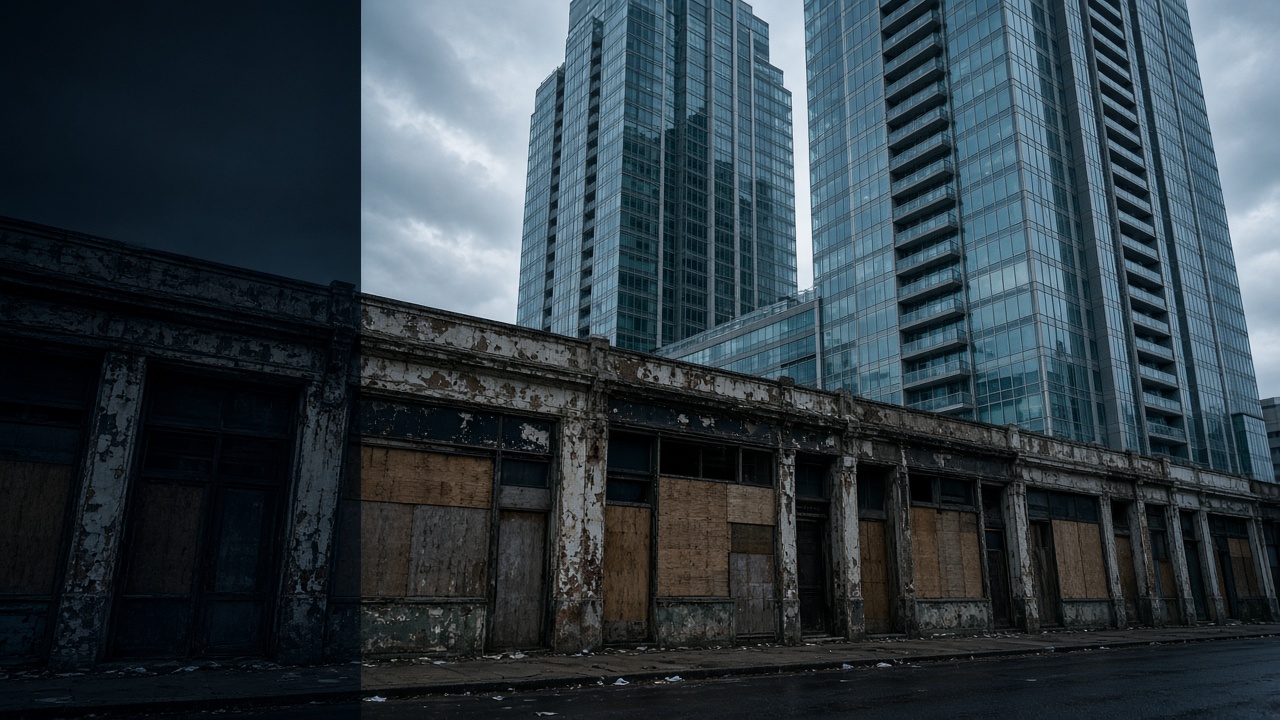
A path in which prices and rents keep outrunning incomes in high-demand cities, delaying household formation and deepening rent burden.
SCENARIOA possible future outcome based on stated assumptions.
Decline does not require a crash. It requires a continuation: costs compounding faster than pay, year after year, in the places people need to live.
- Time period
- Through the 2030s
- Assumptions
- High-demand cities continue to add jobs faster than homes.
- Owner households continue to treat housing primarily as a wealth store.
- Social rental stock does not expand enough to absorb displaced demand.
- Methodology
- Extends OECD affordability evidence and national supply-gap work as a downside case, not as a certainty.
- Variables
- Price-to-income · Rent burden · Household formation age · Homelessness counts where official
- Uncertainty
- A severe downturn can interrupt this path without solving the structural shortage. Interruption is not resolution.
- What could change the result
- Sustained construction boom
- Large social-housing programs
- Income growth concentrated among renters