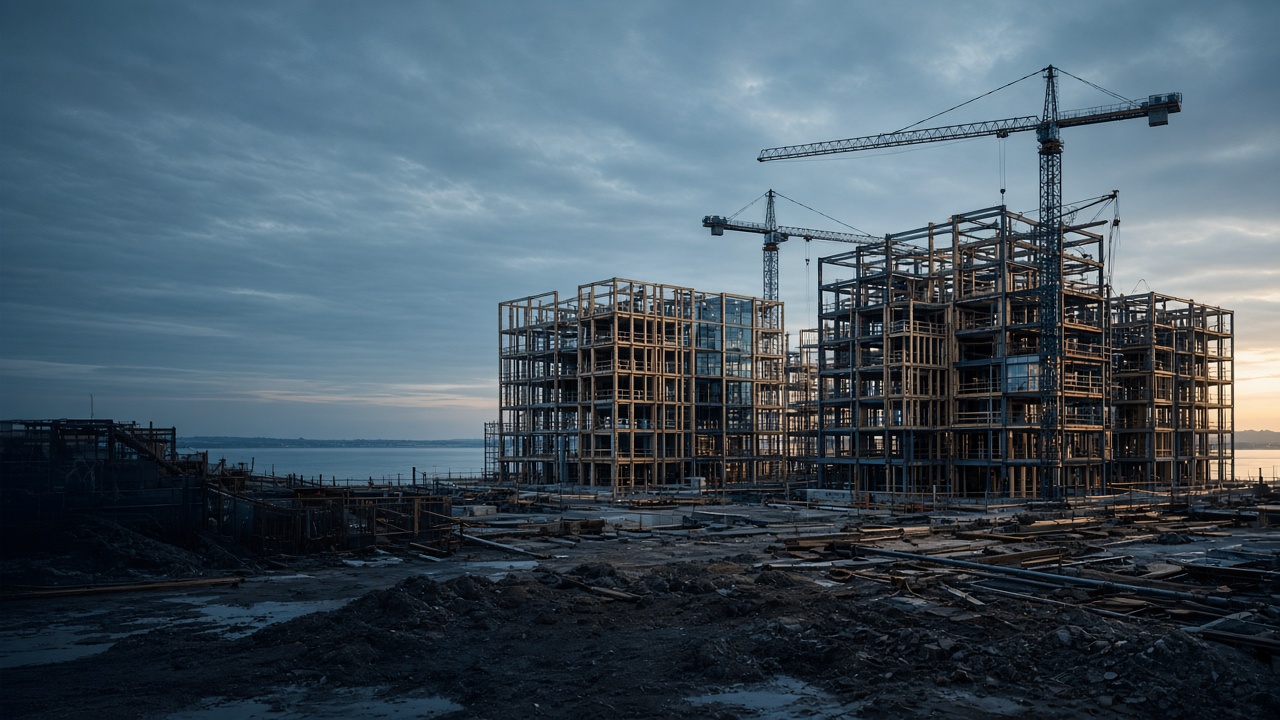
Timber and steel residential framing rising under cranes in early morning light.

The Crisis

Construction

Housing systems fail in slow motion when they cannot produce homes at a steady, code-compliant, affordable pace.

Construction is cyclical. When costs and rates rise, private starts fall. That is why a single good year of completions does not close a decade-long gap.

UN-Habitat's 96,000-units-a-day figure is the global need pace through 2030, not observed output. Canada's official picture is sharper: a 244,149 six-month starts trend in August 2026 against a modeled 417,000–469,000 annual need to restore pre-pandemic affordability by 2036.

Stephen S. Jemal is President and CEO of JemRock Organization LLC, which is developing BUILT. Observations here about factory production should be read with that relationship in mind. Affiliated platforms are not treated as independent proof of a construction-productivity miracle.

Sourced figures

Each figure carries a geography, period, and named source. None of these is a global median home price.

DATA

New units needed per day to 2030

96,000

housing units per day

Geography
World
Period
through 2030

UN-Habitat estimate of the production pace required to meet adequate-housing needs by 2030. This is a need estimate, not observed construction.

DATA

Housing starts, six-month trend

244,149

units, SAAR trend

Geography
Canada
Period
August 2026

CMHC six-month moving average of the seasonally adjusted annual rate of total housing starts.

DATA

Annual starts needed to restore pre-pandemic affordability by 2036

417,000–469,000

homes per year

Geography
Canada
Period
through 2036

CMHC modeled range. The width reflects different assumptions about how strongly households respond to lower prices.

Housing supply